Professional high-touch point sanitization creates healthier Nassau County workplaces by targeting the surfaces employees touch most throughout their day.
Share:
Summary:
High-touch surfaces create the perfect storm for germ transmission in busy Nassau County offices. These areas are touched by numerous people throughout the day, increasing their risk of contamination and becoming major culprits in the spread of bacteria and pathogens in offices and business facilities.
The science is clear about the risk. Many viruses can survive for up to 2 days on surfaces, and there’s no telling how many people can come into contact with contaminated high-touch surfaces in that window. Some office surfaces can become up to 200 times dirtier than a toilet bowl because they are continually touched by dozens or even hundreds of people each day.
Touch point cleaning involves the practice of cleaning, disinfecting and sanitizing high touch point surfaces throughout the day, helping prevent the spread of common illnesses and limit cross-contamination between surfaces and people.

Door handles represent one of the highest-risk areas in any Nassau County office environment. Door handles and knobs are touched by nearly everyone who enters and exits a building, making them high-risk areas for the spread of germs. Every person entering your office brings potential contaminants that get transferred to these critical surfaces.
The cleaning approach for door handles requires specific attention to technique. To properly clean these areas, use a disinfectant spray or wipe that is approved for use on the surface, making sure to clean both sides of the handle or knob and allow it to air dry before the next use. This process needs to happen multiple times throughout the day in high-traffic environments.
The CDC recommends cleaning high-touch surfaces regularly, specifically mentioning door handles alongside other critical areas like elevator buttons, touchpads, and restroom fixtures. The frequency matters as much as the method. Door handles, stair banisters, and lift buttons may need cleaning several times a day depending on office traffic patterns.
Consider the ripple effect of contaminated entry points. When someone touches a contaminated door handle, they carry those germs to every subsequent surface they contact. High touch surfaces like door knobs easily facilitate the spread of germs because they are touched by a lot of people in a short span of time, who then go on to touch another surface, further spreading the bacteria. This makes door handles a critical control point for your entire office’s health strategy.
Professional cleaning services understand these dynamics and build door handle sanitization into comprehensive protocols. Day porter services ensure that all high-touch points are wiped down multiple times throughout the day, providing the consistent attention these critical surfaces require.
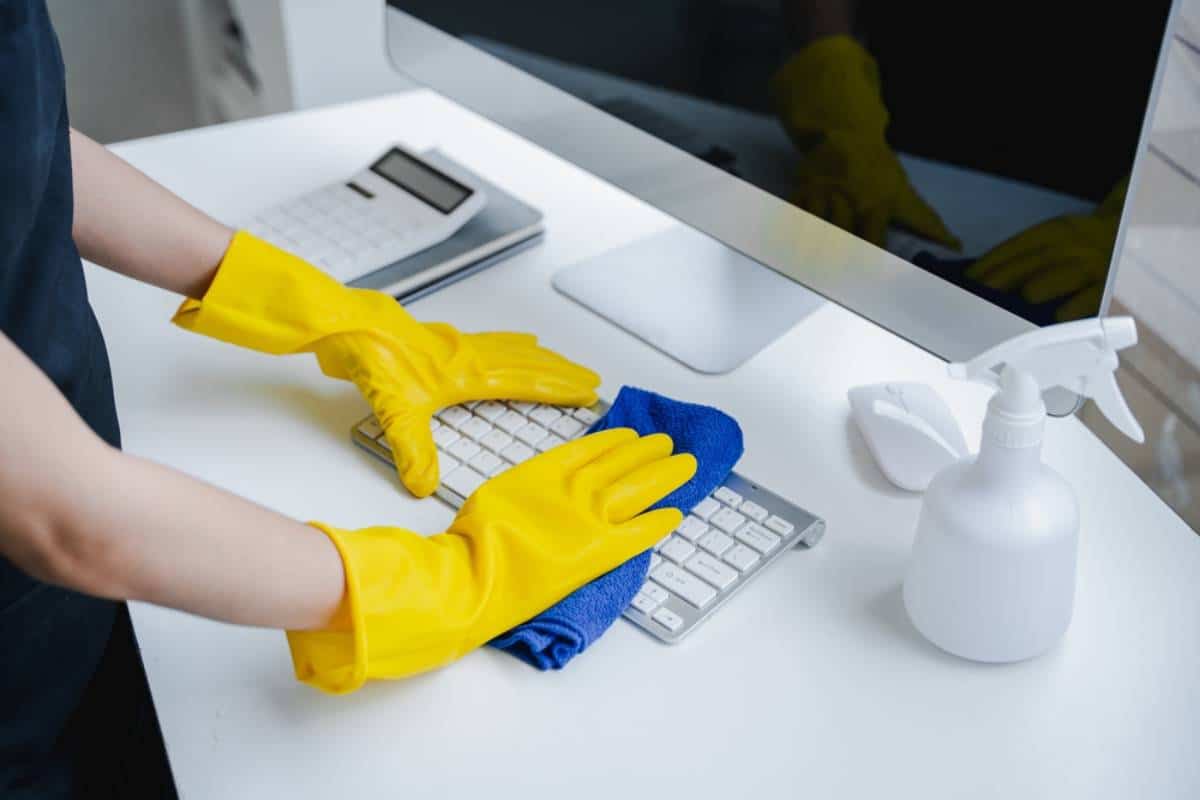
Your office technology creates some of the most challenging sanitization scenarios. Phones and keyboards are the most touched and contaminated office equipment, making it important to clean and sanitize them frequently. These devices require daily attention, but the cleaning approach must protect sensitive electronics while eliminating harmful pathogens.
Cleaning and disinfection of frequently touched surfaces including keyboards and phones should occur at least once a shift. The process requires specific products and techniques. You cannot use aerosol sprays, bleach, or abrasive cleaners to disinfect computers and electronics, and must ensure moisture does not get into any openings.
The proper approach involves careful product selection and application methods. Spray a small amount of disinfectant on a soft cloth and wipe surfaces, gently and carefully wiping the hard, nonporous surface of electronic items including the display, keyboard, mouse and exterior surface. You may also use Clorox disinfectant wipes or wipes containing 70% alcohol if available.
Shared equipment presents additional challenges beyond individual workstations. More employees mean more touchpoints for accumulating germs, such as shared equipment like printers and kitchen appliances. Focus areas should include phones, computers, keyboards, and mice in work areas, but extend to copiers, printers, and other devices multiple people access throughout the day.
To properly clean these surfaces, use a disinfectant wipe or spray and make sure to clean all surfaces that are frequently touched, and it’s also a good idea to provide employees with their own supplies, such as keyboard covers or mousepads, to minimize contact with shared equipment. This dual approach of professional cleaning plus individual protection creates the most effective barrier against contamination.
The timing of technology cleaning requires strategic thinking. Best practices include disinfecting equipment at the start and end of each workday, particularly in shared spaces or where hot-desking is common. The frequency of cleaning and sanitizing office equipment depends on factors such as the type of device, level of use, location, and current health situation, but as a general rule, you should aim to clean and sanitize office equipment at least once a week, or more often if you share it with others.
Want live answers?
Connect with a One-A Cleaning and Maintenance expert for fast, friendly support.
Effective high-touch point sanitization requires more than random cleaning efforts. The Centers for Disease Control and Prevention recommends cleaning high touch surfaces at least once a day for general workplaces. However, Nassau County offices often need more intensive approaches based on traffic patterns and risk factors.
High touch surfaces should be cleaned and disinfected at least 2 or 3 times a day, with objects that are shared and get a lot of use done even more frequently, and other very high traffic surfaces cleaned after each use. This frequency ensures that contamination doesn’t build up between cleaning cycles.
The process itself requires understanding the difference between cleaning and disinfecting. You must clean before disinfecting, otherwise you will not effectively remove illness-causing germs, as cleaning is the act of physically removing germs and bacteria from a surface, while disinfecting is the act of killing all germs and bacteria on a surface.
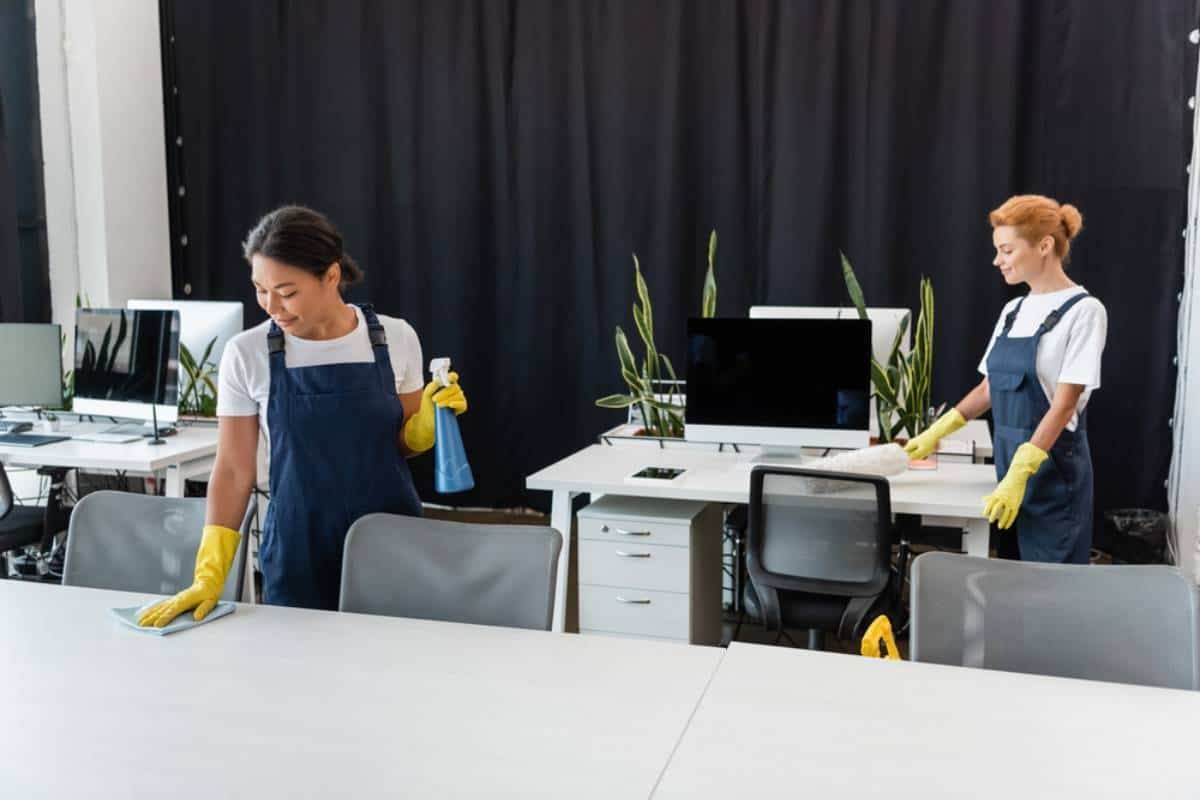
The effectiveness of your sanitization efforts depends heavily on proper contact time and product selection. After you apply the disinfectant to the surface, leave the disinfectant on the surface long enough to kill the germs – this is called the contact/wet time, which can be found in the Safety Data Sheet and directions, and the surface should stay wet during the entire contact time to make sure germs are killed.
Different disinfectants require different contact times for optimal effectiveness. HDQ Neutral requires a 10 minute surface contact time to effectively kill viruses and bacteria, while Purell Surface Disinfectant requires a 1 minute contact time to effectively kill viruses and bacteria. Understanding these requirements ensures your cleaning protocols actually eliminate pathogens rather than just moving them around.
When doing touch point cleaning, using the right products is important – choose a disinfectant that’s effective against a wide range of germs, pay attention to the instructions on cleaning products, as some disinfectants need to stay on the surface for a certain amount of time to be effective. This attention to detail separates effective sanitization from ineffective busy work.
Product selection also involves understanding surface compatibility. Always read the label on disinfecting products to make sure the products can be used on the type of surface you are disinfecting, such as a hard or soft surface, food contact surface, or residual surface. Using the wrong product can damage surfaces while failing to provide adequate protection.
Professional cleaning services bring expertise in product selection and application that most office managers lack. Using EPA-approved disinfectants helps guarantee surfaces are effectively treated and provide the necessary protection against viruses and bacteria. Choose professional disinfectants proven to eliminate bacteria, viruses and fungi, aligning products with industry regulations and any environmental preferences.
Sustainable sanitization requires realistic scheduling that balances effectiveness with operational demands. Clean at least once per day but more frequent cleaning every 2 to 3 hours may be necessary, and if the workplace is operating in shifts of workers, clean between or at least once during each shift. This framework provides the foundation for developing office-specific protocols.
Light tidying, trash removal, cleaning, and basic disinfecting are in order once per week at the very least but preferably daily if possible, paying particular attention to high-touch surfaces, with more thorough, top-to-bottom disinfecting varying depending on how much space there is and how many people share it, and the average office may ask their cleaners to disinfect more intensively once per week in addition to whenever someone gets sick.
The key lies in matching frequency to actual risk levels. Ideally, all high touch surfaces should be wiped down twice a day, but your workplace may require more frequent cleaning intervals depending on how often different people may come into contact with them, which will be determined in the risk assessment. High-traffic areas need more attention than spaces with minimal contact.
Routine matters for high-touch surfaces, with daily, hourly, or event-triggered cleaning protocols ensuring consistent protection, aligning frequency with traffic levels, occupancy rates and seasonal health risks. This systematic approach prevents gaps in coverage that could compromise your entire sanitization program.
Professional services understand how to build sustainable schedules that work with your business operations. Janitorial staff must know which high touch areas to clean and when, requiring clear protocols and consistent execution. Rely on trained professionals who understand the unique cleaning demands of your business, as certified technicians bring consistent attention to detail and understand evolving guidelines.
The scheduling must also account for employee behavior and business cycles. During times of heightened concern for public health, it is necessary to increase the frequency of deep cleaning, regularly clean and disinfect high-touch surfaces, and implement policies for employees to regularly clean and disinfect their workspaces. Flexibility in your sanitization schedule ensures you can respond to changing conditions without compromising protection.
High-touch point sanitization represents one of the most cost-effective investments you can make in your Nassau County office’s health and productivity. The CDC has stated that high-touch point disinfection can be a powerful technique to help reduce the spread of germs, bacteria, and illness, making this approach both scientifically sound and practically effective.
Keeping frequently used surfaces clean and disinfecting them often can kill the bacteria that cause the common cold and flu, as well as more severe conditions. This protection translates directly into reduced sick days, maintained productivity, and a more confident workforce.
The investment pays dividends beyond immediate health benefits. A clean workspace improves the overall morale of employees and leaves a lasting impression on clients and visitors. When you demonstrate commitment to employee health through professional sanitization protocols, you create a workplace culture that attracts and retains quality team members. We at One A Cleaning and Maintenance understand these dynamics and bring the expertise Nassau County businesses need to implement effective high-touch point sanitization that protects your most valuable assets – your people.
Article details:
Share:
Continue learning: