
See Our 100+ Reviews on Google!
Your patients make judgments within seconds of walking through your door. That spotless waiting room immediately signals professional care. Treatment rooms that gleam with medical-grade cleanliness tell patients they’re in expert hands. Even your restrooms reflect your commitment to health and safety.
When your Hempstead dental practice maintains healthcare-level cleanliness, patients feel confident before you even begin their treatment. They see a practice that takes infection control seriously, follows proper protocols, and creates an environment where their health comes first.
This confidence converts directly into patient loyalty, five-star reviews, and the kind of word-of-mouth referrals that grow practices naturally in Nassau County.
One A Cleaning and Maintenance has been Nassau County’s trusted commercial cleaning partner since the 1980s. We know that dental practices face cleaning challenges that typical janitorial companies can’t handle properly.
The difference is expertise. Our team understands medical-grade sanitization protocols, regulatory compliance requirements, and the specialized care that expensive dental equipment demands. We’re not just cleaning—we’re protecting your investment and your patients.
Dental practices throughout Hempstead, Garden City, and surrounding Nassau County communities choose One A Cleaning because we consistently deliver the thorough, compliant cleaning that healthcare environments require.

Everything starts with understanding your specific practice needs. High-traffic waiting areas need different protocols than sensitive treatment rooms. X-ray areas require specialized attention. Your sterilization zone demands medical-grade procedures.
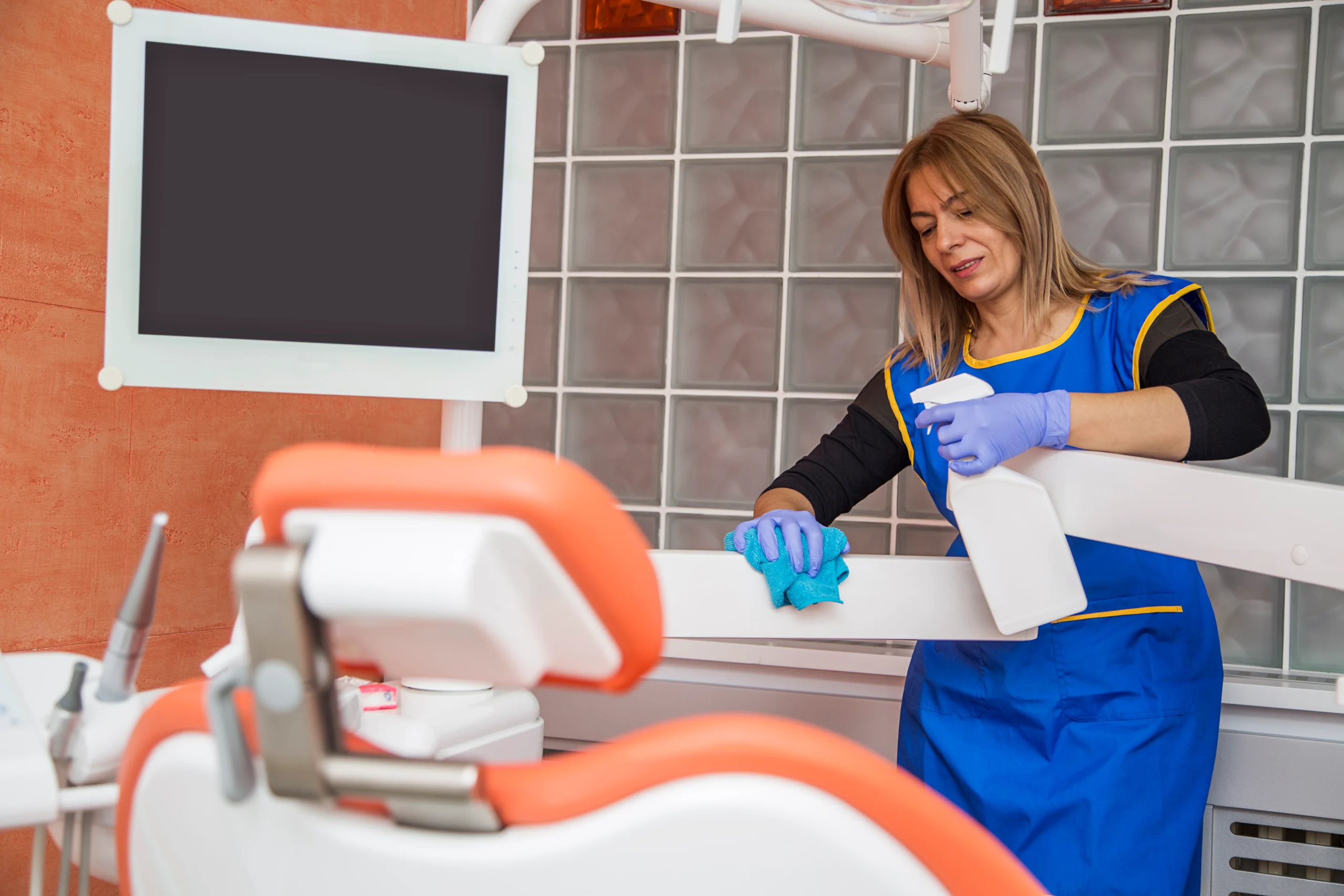
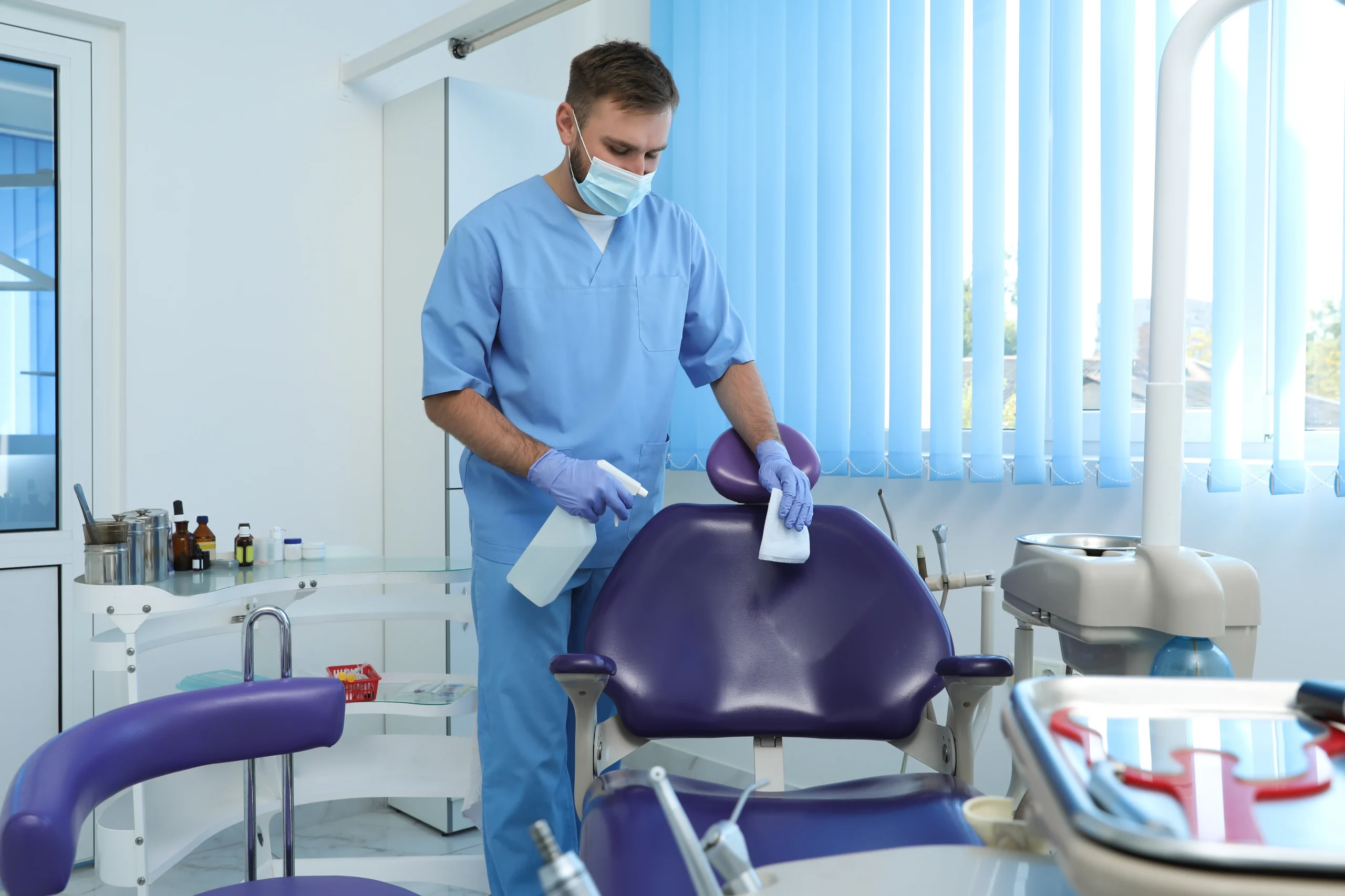
Our certified team arrives after your last patient leaves, equipped with healthcare-approved disinfectants and specialized equipment. Treatment rooms receive focused sanitization of patient chairs, instrument areas, and all surfaces within the contamination zone. Common areas get thorough cleaning with extra attention to high-touch surfaces like door handles, reception counters, and waiting room furniture.
Before leaving, we complete detailed documentation required for regulatory compliance. Your practice opens each morning to a spotless, inspection-ready environment that puts both patients and staff at ease.
Ready to get started?
Dental office cleaning isn’t just about making things look clean—it’s about eliminating pathogens that could harm your patients. Your practice generates aerosol particles during procedures, deals with blood and saliva, and faces strict regulatory oversight that can shut you down for non-compliance.
Nassau County health inspectors know exactly what to look for during dental practice inspections. They check for proper cleaning documentation, appropriate disinfection protocols, and evidence of cross-contamination prevention. One failed inspection can damage your reputation and cost thousands in fines.
Your cleaning service needs to understand CDC guidelines for dental settings, proper handling of contaminated materials, and documentation requirements that prove compliance. We safely clean sensitive digital equipment without damage while ensuring complete pathogen elimination. Most importantly, we have the expertise to keep your practice operating smoothly while meeting every regulatory requirement.

Dental offices generate aerosol particles during procedures that can contain bacteria and viruses, requiring specialized disinfection protocols that go far beyond surface cleaning. Regular commercial cleaners focus on appearance, while dental cleaning must eliminate pathogens and prevent cross-contamination.
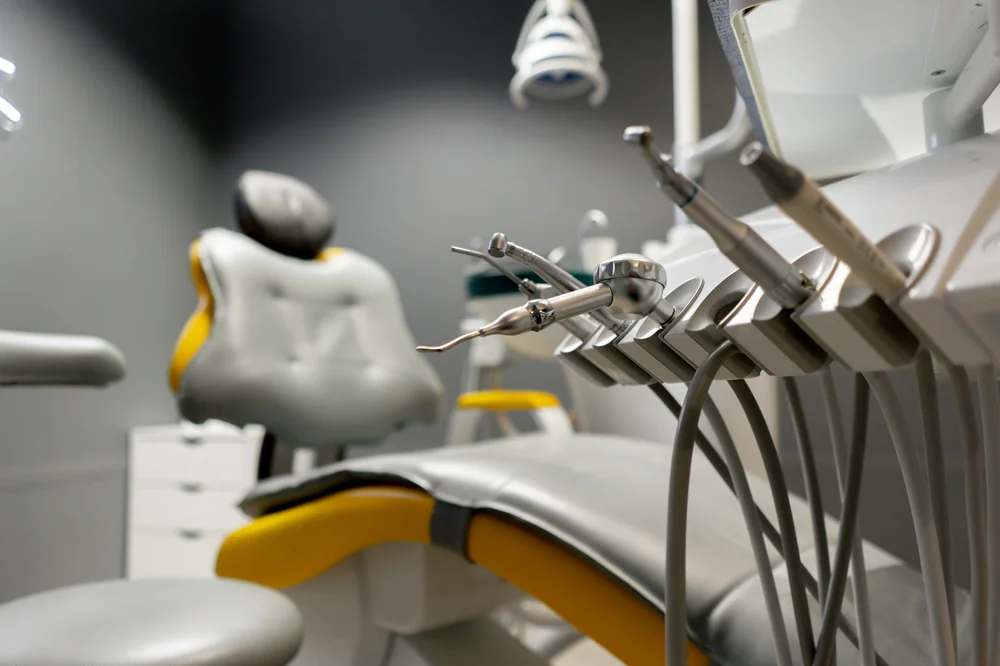
Our cleaning process follows CDC guidelines specific to dental settings, using EPA-registered disinfectants with proven kill rates against healthcare-associated pathogens. Equipment like dental chairs, handpiece connections, and digital sensors require careful cleaning without moisture damage to expensive components.
Nassau County health inspectors specifically evaluate cleaning protocols during practice inspections. They look for proper documentation, appropriate disinfectants, and evidence of systematic contamination control—requirements that typical janitorial services simply don’t understand or provide.
Most dental practices need professional cleaning after each day of patient care, with comprehensive deep cleaning weekly. Practices performing oral surgery or treating high-risk patients may require daily deep sanitization of all treatment areas.
Treatment rooms need thorough disinfection after each patient, but professional-grade cleaning addresses areas that routine turnover cleaning misses—like aerosol contamination on walls, ceiling fixtures, and equipment surfaces. Waiting areas and restrooms require daily professional attention due to high patient traffic.
The specific frequency depends on your patient volume, procedure types, and risk factors. Emergency cleaning should be immediately available for blood spills, instrument accidents, or other contamination events that require professional-grade response beyond your staff’s capabilities.
We use EPA-registered disinfectants specifically formulated for healthcare equipment compatibility. These products provide required pathogen kill rates while being safe for digital x-ray sensors, computer monitors, dental chair upholstery, and other sensitive components.
The key is using the right product for each surface type. Alcohol-based disinfectants work well for non-porous surfaces but can damage certain plastics. Quaternary ammonium compounds are gentler on equipment but require longer contact times for effectiveness.
We maintain detailed compatibility charts and use products recommended by major dental equipment manufacturers. We understand which disinfectants to avoid on specific surfaces and how to achieve complete sanitization without voiding equipment warranties or causing expensive damage.
We maintain comprehensive logs including date, time, areas cleaned, products used, and staff performing the work. This documentation demonstrates compliance with CDC guidelines and local health department requirements during inspections.
Our logs detail specific protocols followed for different practice areas—from waiting rooms requiring standard commercial cleaning to treatment rooms needing medical-grade disinfection. Photos may document completion of specialized tasks like equipment sanitization or contamination cleanup.
These records prove your practice follows systematic infection control procedures rather than random cleaning efforts. During health department visits, proper documentation often determines whether you pass inspection or face citations, fines, and potential practice closure for non-compliance.
We work around your practice schedule to minimize patient and staff disruption. Most routine cleaning occurs after your last appointment when the practice is empty, allowing thorough sanitization without interrupting care.
Emergency cleaning is available during business hours for urgent situations like blood spills or equipment contamination. We use hospital-quiet equipment and work efficiently in occupied spaces without disturbing patient treatments or staff workflow.
Our scheduling flexibility accommodates early morning practitioners, late evening schedules, and weekend appointments. Some practices prefer pre-opening cleaning to ensure fresh environments for first patients, while others need post-procedure deep cleaning after complex surgeries or high-risk patient treatments.
We follow strict OSHA bloodborne pathogen protocols for handling contaminated materials. Our cleaning staff wear appropriate PPE including fluid-resistant gowns, gloves, eye protection, and masks when working in treatment areas.
Blood and bodily fluid cleanup follows specific procedures: immediate containment, removal of visible material, thorough disinfection with EPA-registered products, and proper disposal of contaminated cleaning supplies as medical waste rather than regular trash.
We coordinate with your medical waste disposal service to ensure proper handling of any contaminated materials generated during the process. We understand the difference between regulated medical waste and general refuse, maintaining compliance with both OSHA requirements and local health department regulations.
Other Services we provide in Hempstead