Learn the 10 critical hygiene protocols that keep Nassau County students healthy and schools compliant with current health and safety standards.
Share:
Summary:
High-touch surfaces are where most illness transmission happens in schools. These are the spots that dozens or hundreds of hands contact throughout the day. Desks, doorknobs, light switches, computer keyboards, shared equipment, faucet handles, and phones all fall into this category.
The distinction matters because not every surface in your school needs the same level of attention. A filing cabinet top that nobody touches doesn’t require daily disinfection. But that bathroom door handle that 200 students use between classes absolutely does. Understanding this difference helps you allocate cleaning resources where they’ll have the biggest impact on student health and safety.
Walk through your school and watch how students move through the space. That’s the best way to identify your true high-touch areas. The bathroom door handles get touched every time someone enters or exits. Stairway railings see constant hand contact during class changes. Water fountain buttons get pressed hundreds of times daily. Cafeteria tables and chairs see multiple rounds of students each lunch period.
Start by mapping out the surfaces in your highest-traffic areas. Hallways during class changes, restrooms throughout the day, cafeterias during meal times, and main entrances where everyone enters and exits. These zones need the most frequent attention. Computer labs present their own challenges with keyboards, mice, and shared equipment that multiple students use back-to-back.
Don’t overlook the less obvious spots. Vending machine buttons, elevator buttons, gym equipment, library book covers, and classroom supply bins all qualify as high-touch surfaces. The key is thinking about what students actually touch, not just what looks dirty. A desk might look clean but still harbor germs from the previous class period.
Create a checklist specific to your facility. Every school has unique layouts and traffic patterns. Your elementary school cafeteria operates differently than your high school commons area. Your science labs have different needs than your art rooms. Document which surfaces get touched most frequently in each space, then build your cleaning protocols around that reality.
Frequency matters as much as identification. Some surfaces need attention multiple times daily. Restroom fixtures should be cleaned and disinfected at least three times during the school day. Classroom desks benefit from quick disinfection between class periods when possible. Main entrance door handles might need attention every few hours during peak traffic times. Match your cleaning frequency to actual usage patterns rather than following a generic schedule.
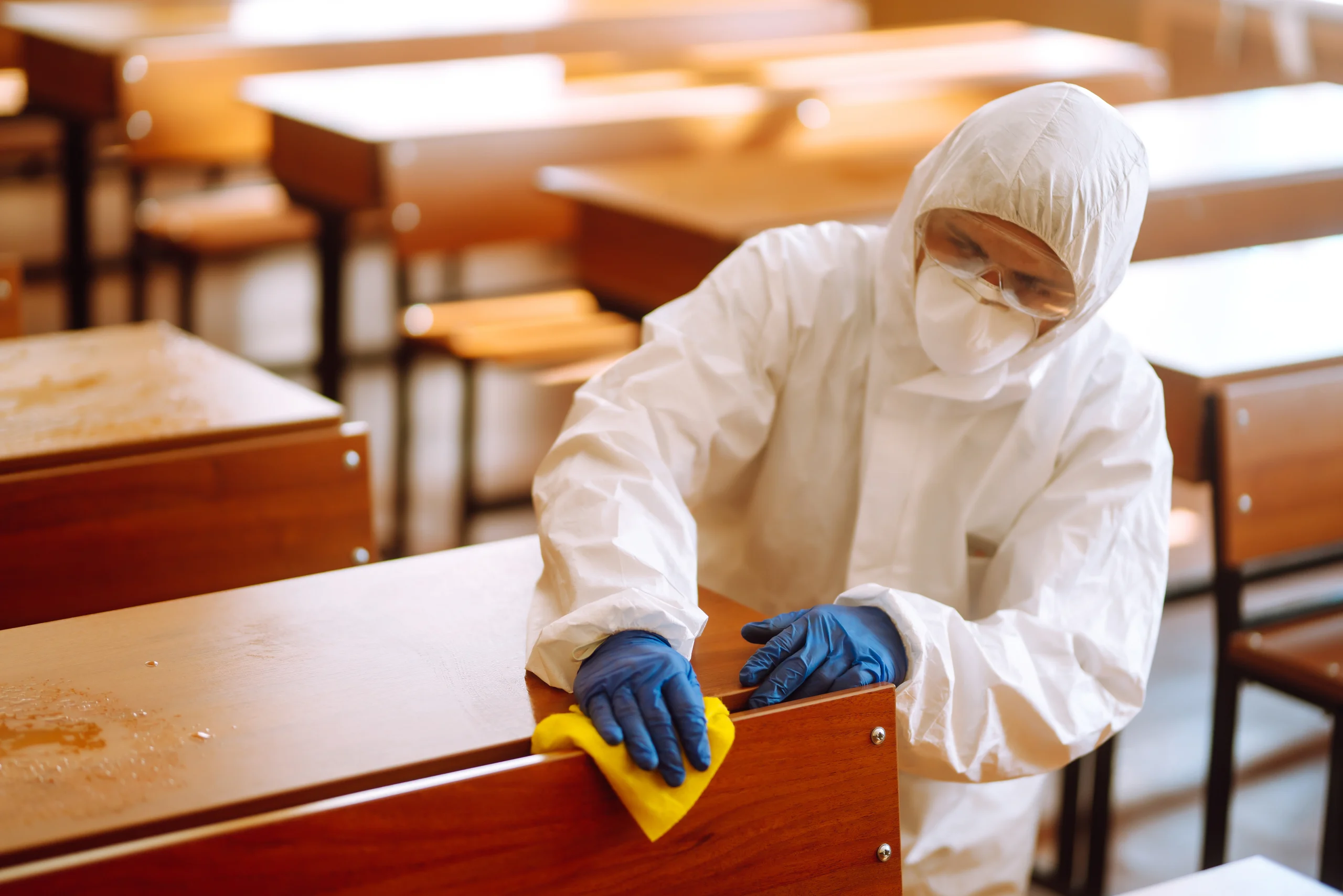
There’s a critical difference between cleaning and disinfecting that most people miss. Cleaning removes visible dirt and some germs using soap and water. Disinfecting kills germs using chemicals. You need both steps working together to actually protect students from illness transmission. Skipping either step leaves your school vulnerable.
The process matters more than most schools realize. You must clean surfaces first with soap and water to remove dirt and organic material. Disinfectants can’t work effectively on dirty surfaces. Once the surface is clean, then you apply the disinfectant. Here’s where most protocols fail: the disinfectant must remain wet on the surface for a specific contact time, usually 3 to 5 minutes, to actually kill germs.
That contact time requirement changes everything about how you approach disinfection. If you spray a desk and immediately wipe it dry, you haven’t disinfected anything. The surface needs to stay visibly wet for those critical minutes. When using disinfecting wipes on electronics, you might need multiple wipes to keep surfaces wet for the required time. This detail matters more than the brand of disinfectant you choose.
Product selection requires attention to safety, especially in schools. EPA-registered disinfectants designed for educational facilities balance effectiveness with student safety. Harsh chemicals like bleach can trigger asthma and respiratory issues in students. Eco-friendly options that are safe for children while still meeting EPA standards for germ-killing effectiveness exist and work well in school environments.
Proper ventilation during disinfection protects both cleaning staff and students. Open windows when possible. Run HVAC systems to circulate fresh air. Never mix cleaning products, as this can create toxic fumes. Store all cleaning chemicals in their original containers with labels intact. Keep them secured away from student access. These basic safety protocols protect everyone in your building.
Training your cleaning staff on proper techniques makes the difference between going through the motions and actually reducing illness transmission. They need to understand contact times, proper dilution ratios, appropriate personal protective equipment, and which products work for which surfaces. Consistent execution of proper protocols delivers the health outcomes your school needs.
Want live answers?
Connect with a One-A Cleaning and Maintenance expert for fast, friendly support.
Classrooms need daily cleaning and disinfection to maintain healthy learning environments. This isn’t optional or something you do when you have time. Daily attention to classroom hygiene directly impacts student attendance and academic performance. The question isn’t whether to clean classrooms daily, but how to do it effectively given your school’s resources and schedule.
The baseline requirement is straightforward: clean and disinfect all high-touch surfaces at least once daily. That includes student desks, chairs, door handles, light switches, shared equipment, teacher’s desk, and any technology students touch. Restrooms require more frequent attention throughout the day. Cafeteria tables and chairs need cleaning and sanitizing between lunch periods.

Your cleaning schedule needs to match your school’s actual rhythm and traffic patterns. Elementary schools operate differently than high schools. Schools with multiple lunch periods have different needs than schools with a single lunch block. After-school programs extend the cleaning window. Understanding your specific situation helps you build a schedule that actually works.
Most schools benefit from a layered approach to cleaning throughout the day. Light cleaning and disinfection of high-touch surfaces happens during school hours, focusing on restrooms, cafeteria tables between lunch periods, and quick attention to obvious spills or messes. The heavy cleaning happens after students leave, when cleaning staff can thoroughly clean classrooms, hallways, and common areas without disrupting learning.
Consider the timing of your most intensive cleaning. Many schools schedule deep cleaning for evenings or weekends to avoid interrupting instruction. This makes sense for floor care, window washing, and other tasks that require equipment or extended time. But high-touch surface disinfection can’t wait until evening. Those surfaces need attention multiple times throughout the day to effectively reduce germ transmission.
Build flexibility into your schedule for illness outbreaks. When flu season hits Nassau County schools, or when you have a confirmed case of a contagious illness, your cleaning protocols need to intensify. Have a plan ready for how you’ll increase frequency of disinfection in affected areas. Know which staff members can step in to provide additional cleaning support during these critical times.
Document your cleaning schedules and make them visible. Checklists help ensure consistency. They provide accountability for cleaning staff and give administrators confidence that protocols are being followed. Digital tracking systems work well for larger facilities. Simple paper checklists suffice for smaller schools. What matters is having a system that confirms cleaning actually happened as scheduled.
Communication between teachers and cleaning staff improves outcomes. Teachers can flag areas needing extra attention. Cleaning staff can report maintenance issues they notice. This partnership approach ensures nothing falls through the cracks and problems get addressed quickly before they become bigger issues affecting student health or facility condition.
Restrooms and cafeterias present unique hygiene challenges that require specialized protocols. These are your highest-risk areas for illness transmission. Restrooms involve contact with body fluids and require proper disinfection multiple times daily. Cafeterias involve food preparation and consumption, making them subject to stricter sanitation standards than regular classrooms.
Restroom protocols need to happen at minimum three times during the school day: morning, midday, and afternoon. High-traffic restrooms might need attention every few hours. The protocol includes cleaning and disinfecting all fixtures, toilets, sinks, faucets, door handles, and push bars. Floors require proper mopping with disinfectant. Supplies like soap, paper towels, and toilet paper need constant monitoring and restocking throughout the day.
The distinction between cleaning, sanitizing, and disinfecting becomes critical in cafeterias. Food preparation areas require sanitization to reduce germs to safe levels defined by public health standards. Cafeteria tables and chairs need proper cleaning to remove food debris, then sanitizing or disinfecting depending on your local health department requirements. Trash removal must happen promptly to prevent odors and pest issues.
Timing matters significantly in cafeteria cleaning. Tables should be cleaned and sanitized between lunch periods, not just at the end of the day. This prevents cross-contamination between different groups of students. Floors need attention after each lunch period to address spills and prevent slip hazards. Kitchen areas require specialized cleaning that follows food safety protocols beyond general facility cleaning.
Special attention to shared equipment in cafeterias reduces illness transmission. Serving line counters, tray return areas, condiment dispensers, and drink stations all qualify as high-touch surfaces needing frequent disinfection. Vending machines in or near cafeterias also require regular cleaning. These details make the difference between going through the motions and actually protecting student health.
Monitor supply levels in both restrooms and cafeterias constantly. Running out of soap in a restroom defeats your entire hand hygiene program. Inadequate paper towels forces students to share hand dryers that can spread germs. Empty sanitizer dispensers in cafeterias leave students unable to clean hands before eating. Supply management isn’t glamorous, but it’s fundamental to maintaining hygiene protocols.
The right hygiene protocols make measurable differences in student health and attendance. Schools with proper disinfection protocols see up to 50% reductions in illness-related absenteeism. Students in professionally cleaned classrooms are more than twice as likely to stay healthy during flu season. These aren’t small improvements. They’re the difference between constant disruption from illness outbreaks and maintaining consistent learning environments.
Implementation requires consistent execution, proper training, and often professional support. Your teaching staff focuses on education. Your administrators handle countless responsibilities. Professional janitorial services bring specialized expertise, proper equipment, and systematic protocols that reduce the burden on your internal staff while delivering better health outcomes for your students.
At One A Cleaning and Maintenance, we understand the unique needs of Nassau County schools. Our team provides professional cleaning services specifically designed for educational facilities, using CDC-recommended methods and eco-friendly products safe for students. Whether you need daily janitorial services, specialized disinfection during illness outbreaks, or comprehensive facility maintenance, having the right partner makes implementing these essential hygiene protocols manageable and effective.
Article details:
Share:
Continue learning: