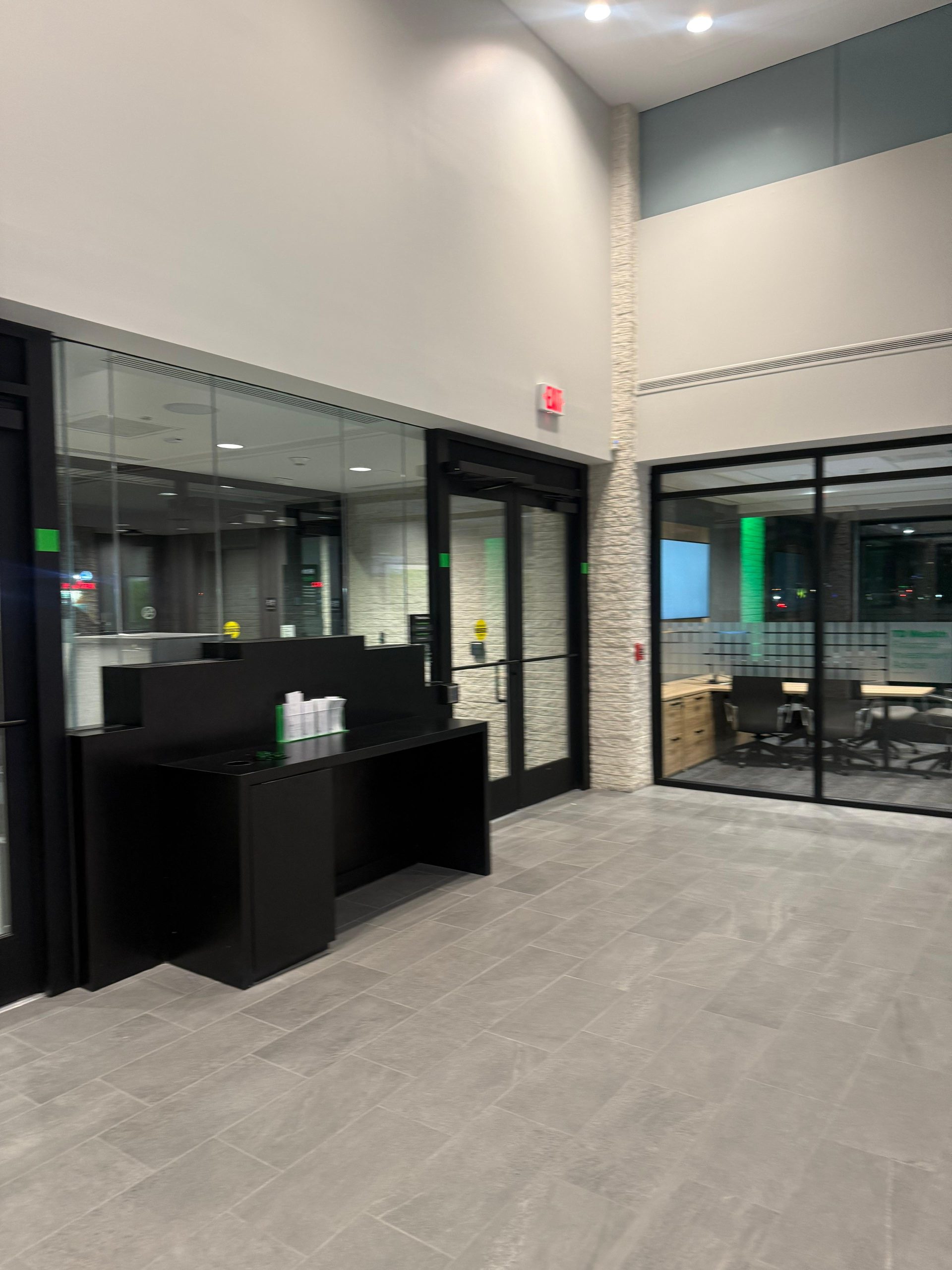
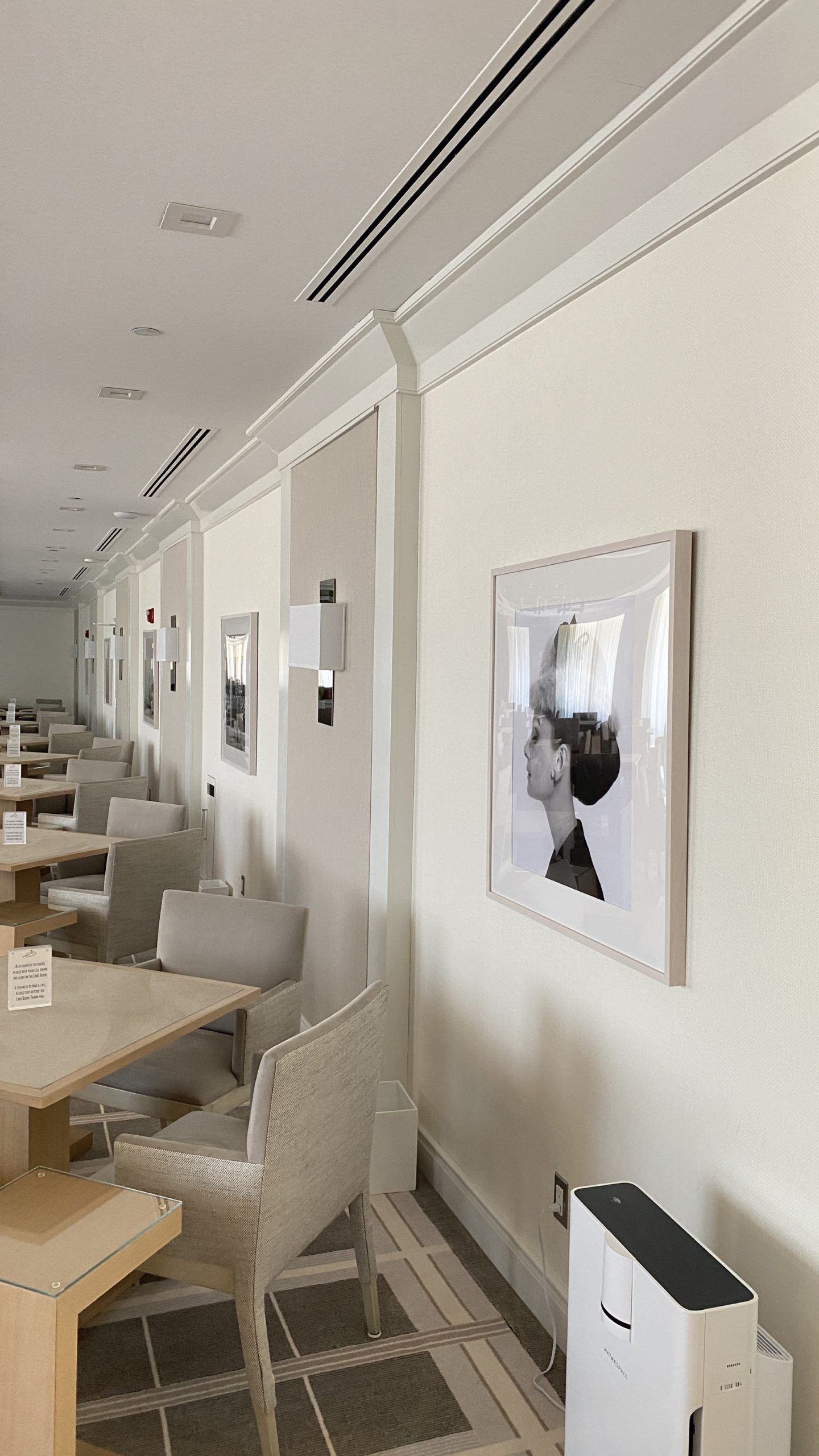
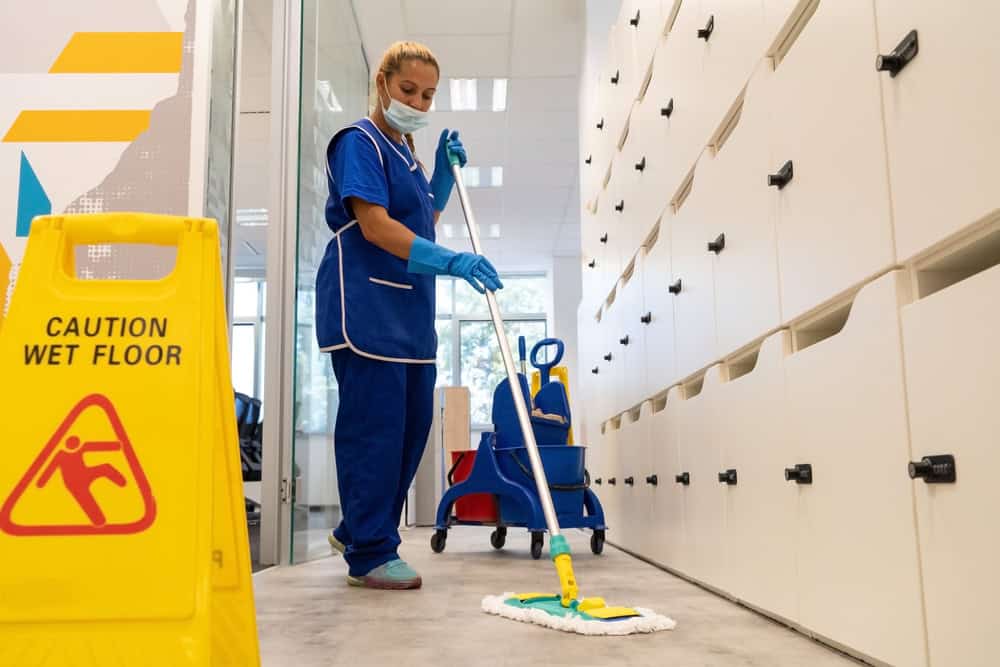
Construction is done — but the real cleanup is just getting started. Here's what post-construction cleaning actually looks like, room by room.
Share:

Summary:
Your contractor packed up. The last tool left the site. And now you’re standing in a space that’s technically “done” — except for the white haze coating every surface, the caulk residue on the new tile, and the drywall dust that’s somehow gotten into every cabinet, vent, and corner in the building.
This is where post-construction cleaning begins. Not a quick mop-and-vacuum situation — a real, methodical process that moves room by room and phase by phase. If you’re trying to understand what that process actually looks like before you hire anyone or attempt it yourself, this guide is for you.
The biggest misconception about post-construction cleaning is that it’s one event. You call a crew, they show up, they clean, it’s done. In reality, professional post-construction cleaning happens in three distinct phases — and the order matters more than most people realize.
The first phase is the rough clean. This is debris removal: hauling out leftover construction materials, sweeping large particulates, and getting the space to a baseline where detail work can actually begin. You can’t wipe down surfaces while chunks of drywall are still on the floor.
The second phase is the detail clean — the most time-intensive part. This is where our trained cleaners work top to bottom, room by room, addressing the fine dust that settled on every horizontal surface, the adhesive residue on new flooring, the paint overspray on fixtures, and the grime packed into grout lines. The third phase is the final clean: surface polishing, window cleaning, floor finishing, and a full walkthrough to verify nothing was missed. Skipping or collapsing phases is exactly why DIY attempts and contractor broom sweeps leave spaces that still don’t feel clean.
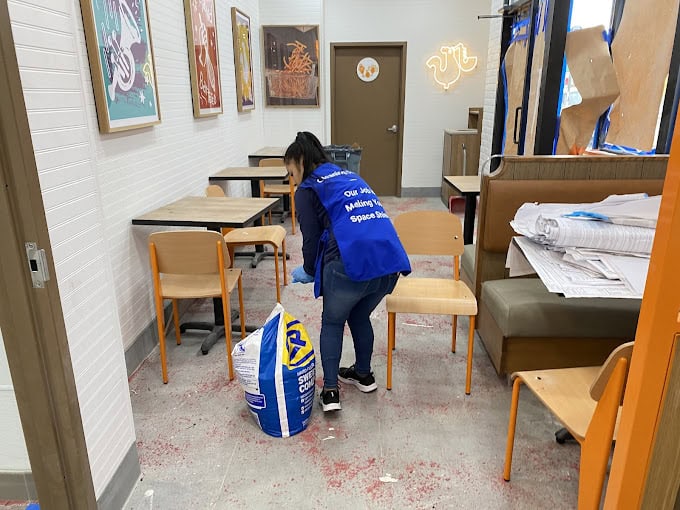
Here’s something worth knowing before you pull out the household vacuum: construction dust is not regular dust. It’s a mixture of silica particles, drywall compounds, fine particulates from cutting and sanding, and residue from adhesives, caulk, and paint. When you run a standard vacuum over it, the filter can’t capture particles that fine — so the machine pulls them up and releases them right back into the air, where they resettle on the surfaces you just cleaned.
We rely on HEPA-filtered vacuums specifically because they trap the particles that standard equipment recirculates. Pair that with microfiber cloths (which grab and hold fine dust rather than pushing it around) and you’re actually removing the contamination instead of redistributing it.
For new stone countertops, unsealed grout, or freshly laid luxury vinyl tile, the cleaning products matter just as much as the equipment. Neutral pH cleaners are used on these surfaces for a reason — an aggressive chemical on fresh grout or new LVT adhesive can cause damage that costs far more to fix than the cleaning itself.
The room-by-room approach exists because different spaces have different priorities. Kitchens need attention to cabinet interiors, appliance surfaces, and grout lines. Bathrooms need fixture cleaning, mirror polishing, and grout work. Living areas and offices need vent cleaning, baseboard wiping, and floor care. Windows throughout the space need streak-free cleaning that accounts for construction film — not just a standard wipe-down. Each room has its own checklist, and our crew works through them in a sequence that prevents already-cleaned areas from getting re-contaminated by dust disturbed elsewhere.
One detail that catches a lot of people off guard: HVAC vents. Construction dust migrates into ductwork and vent covers during the build. If those aren’t addressed during the post-construction clean, the first time the system runs it pushes that dust back through the entire space. It’s a small thing that makes a significant difference in air quality — especially in spaces where people with allergies, children, or respiratory sensitivities will be living or working.
General contractors are skilled at what they do — building, not cleaning. When a GC says the site has been cleaned up, what that typically means is that large debris has been removed and the floors have been swept or blown out. That’s it. It’s not a criticism; it’s just a different scope of work.
What remains after a contractor sweep is substantial. Paint overspray on bathroom mirrors and window glass. Caulk residue along tile edges and around fixtures. Adhesive residue on new flooring where protective film was pulled up. Drywall dust on every baseboard, door frame, light switch plate, and cabinet exterior — and inside the cabinets too, because dust finds its way everywhere. Fingerprints and smudges on new windows. Grout haze on tile floors. Fine particulates on every light fixture, ceiling fan blade, and vent cover in the space.
None of that gets addressed in a contractor sweep. And none of it is visible until you’re actually standing in the space trying to figure out why it still doesn’t feel clean.
This is the core argument for professional post-construction cleaning services: not that contractors do bad work, but that post-construction cleaning is a separate discipline with its own equipment, products, and methodology. The same way you wouldn’t ask a painter to install the plumbing, you wouldn’t ask the GC’s crew to perform a detail clean. These are different skill sets. Our trained post-construction cleaning team knows how to identify freshly sealed surfaces that need gentle products, recognize areas where dust has migrated and settled, and follow a room-by-room sequence that ensures the final walkthrough actually holds up.
For commercial spaces — a law office in Garden City, a medical suite in Hempstead, a daycare in Westbury — there’s also a compliance dimension. Occupancy permits and health inspections require the space to be genuinely clean before anyone moves in. That’s not a contractor’s responsibility. It’s our responsibility as a janitorial cleaning services provider, and it needs to be treated as one.
Want live answers?
Connect with a One-A Cleaning and Maintenance expert for fast, friendly support.
Nassau County has a particular mix of construction and renovation activity that shapes what post-construction cleaning looks like here. You have post-WWII suburban homes in places like Freeport and Hempstead being gut-renovated, high-end new construction in Garden City and Old Westbury, commercial buildouts across the county’s business corridors, and everything in between.
Coastal proximity adds another layer. Homes near Long Beach and Nassau Shores deal with salt air and humidity that affect how dust behaves, how quickly surfaces re-contaminate, and what cleaning products are appropriate for certain finishes. A post-construction clean in a beachfront property isn’t identical to one in an inland office building — the conditions are different, and our approach needs to account for that.

The honest answer is: longer than most people expect, especially if you’re doing it yourself. A rough estimate puts professional cleaning time at around one hour per 100 to 200 square feet for a thorough detail clean. For a full home, that typically translates to eight to twelve hours — and that’s with a trained crew using the right equipment.
DIY attempts on the same space generally take three to five times longer, and rarely achieve the same result because household tools simply aren’t built for construction-level particulates.
Timing matters too. The optimal window for scheduling post-construction cleaning is 24 to 48 hours after the last trade leaves the site. That buffer gives airborne dust time to settle, so our cleaning crew can capture it all in a single visit rather than chasing particles that are still migrating. If you clean too early — while other trades are still finishing up — you’re essentially cleaning twice.
For homeowners in Nassau County who have movers scheduled or a move-in date on the calendar, this timing coordination is critical. A professional crew that understands project timelines can work around your schedule and mobilize quickly when the window opens. That flexibility is worth factoring into your decision when you’re comparing providers.
Not every cleaning company that offers post-construction cleanup has actually done it at scale or understands what the work involves. A few questions worth asking before you book anyone: Do they use HEPA-filtered vacuums? What products do they use on new stone, tile, and LVT? Do they work top to bottom, room by room, or do they clean by task across the whole space? Do they include a final walkthrough?
Licensing and insurance matter more here than in routine cleaning because you’re dealing with brand-new finishes that are expensive to repair or replace. If a cleaner uses the wrong product on fresh grout or an abrasive pad on a new countertop, you want to know that the company is accountable for it. Licensed and insured isn’t a checkbox — it’s a real protection for your investment.
Reviews are a useful signal, but look for specificity. A company with 100+ Google reviews that mention reliability, thoroughness, and showing up on time tells you more than five-star ratings with no detail. For commercial clients — property managers, business owners, general contractors who need a post-construction clean before their client’s occupancy inspection — the ability to communicate clearly and hit a deadline is non-negotiable. A cleaning crew that goes quiet or shows up late on the day of a final walkthrough creates real problems downstream.
One more thing worth knowing: all supplies, equipment, and cleaning products should be included. If a provider asks you to supply anything, that’s a gap in their operation. We arrive with everything needed — HEPA vacuums, microfiber cloths, specialty surface cleaners, telescoping dusters for high fixtures and vents — and leave the space genuinely ready for occupancy.
Post-construction cleaning isn’t complicated once you understand what it actually involves — three phases, a room-by-room sequence, the right equipment for fine particulates, and surface-appropriate products that protect new finishes rather than damage them. The gap between a contractor sweep and a space that’s genuinely move-in ready is real, and it’s bigger than most people expect until they’re standing in it.
If you’re at or near that stage — whether it’s a home renovation in Freeport, a commercial buildout in Garden City, or a new construction project anywhere across Nassau County — One A Cleaning and Maintenance is the team to call. Family-owned, locally operated, licensed and insured, with 100+ Google reviews and the equipment to do the job right. Text 516-695-5649 to talk through your project and get a timeline that works for you.
Article details:
Share:
Continue learning: