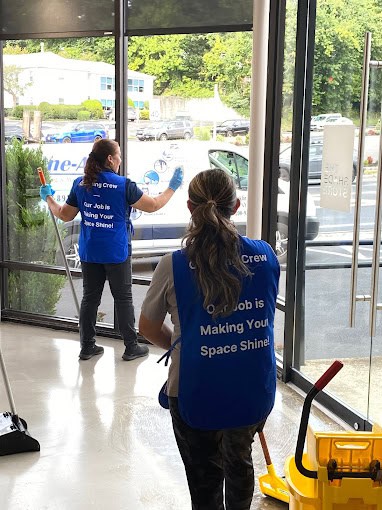
Not sure what post-construction cleaning actually covers — or what it should cost? Here's a clear, honest breakdown of the phases, scope, and pricing factors for Nassau County homeowners.
Share:

Summary:
You just finished a renovation. The contractor packed up, shook your hand, and said the place is ready. Then you walked in.
There’s a fine white film on every surface. The new windows have adhesive streaks. The kitchen cabinets have sawdust in the corners. And the floors — the ones you spent real money on — have paint specks you’re hoping aren’t permanent.
This is the part nobody warns you about. Construction clean up is not a quick sweep. It’s a multi-phase process that requires the right equipment, the right products, and the right sequence. Get it wrong and you risk damaging the very things you just paid to install. Get it right and your space is genuinely move-in ready.
Here’s exactly what that looks like.
The term “post-construction clean up” gets used loosely. Some people mean a basic debris sweep. Others mean a full top-to-bottom detail of every surface, fixture, and floor in a newly finished space. The difference matters — both in what you get and what you pay.
Professional construction site clean up is typically executed in three distinct phases: the rough clean, the final clean, and the touch-up. Each phase serves a different purpose, uses different techniques, and happens at a different point in the project timeline. Skipping or combining phases isn’t a shortcut — it’s how you end up with scratched hardwood, etched stone countertops, and fine dust that keeps reappearing for weeks.
Understanding the phases is the single best thing you can do before you hire anyone.
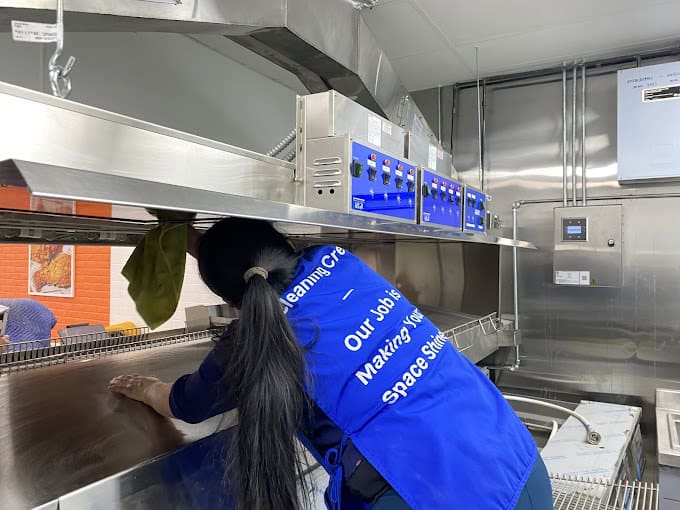
The rough clean is the first phase, and it’s the most labor-intensive. This happens during or immediately after the main construction work — often while trades are still finishing up. The goal is to remove bulk debris: wood scraps, packaging materials, drywall offcuts, excess caulk, and the heaviest accumulations of dust and dirt. It’s not about making the space look polished. It’s about clearing the field so the next phase can actually do its job.
The final clean comes after all trades have left and the space is structurally complete. This is where the real work happens. Crews vacuum every surface from ceiling to floor using HEPA-filtered equipment — not standard vacuums, which recirculate fine particles right back into the air. After vacuuming, surfaces are wiped down with products appropriate to each material: glass cleaner on windows, non-abrasive solutions on new countertops, appropriate cleaners on tile and grout.
Fixtures are cleaned and polished. Cabinets are wiped inside and out. Vents are cleared of accumulated dust. This phase takes the most time and requires the most skill, because this is where you’re working directly on finished, permanent surfaces that can be damaged by the wrong product or technique.
The touch-up phase is often underestimated, but it’s the one that matters most to the person who’s about to move back in. It happens in the days immediately before occupancy — after any last-minute contractor work, deliveries, or inspections that inevitably kick up more dust and leave new smudges. It’s a targeted pass: spot-cleaning fingerprints, re-wiping surfaces that got dusty again, addressing anything the final clean missed.
Not every project needs all three phases. A minor bathroom update may only call for a final clean and a touch-up. A full gut renovation or new construction will need all three, and skipping the rough clean means the final clean crew is spending their time on debris removal instead of detailed surface work — which costs you more in hours and usually produces worse results.
General contractors do clean up before they leave — but what that means in practice is usually a broom sweep of the major debris and a quick once-over of the main surfaces. That’s not a criticism. It’s just not their trade.
What a contractor’s crew typically leaves behind: fine drywall dust that has settled into every horizontal surface, inside every cabinet, and along every baseboard. Adhesive residue on windows and glass from protective film. Paint splatters on floors, fixtures, and trim. Caulk smears around tubs, sinks, and windows. Sawdust in vents and on top of door frames. Grout haze on newly tiled surfaces that hardens quickly and becomes much harder to remove if it’s not addressed in the right window.
None of this is visible from a distance. You notice it when you run your hand across a surface, when the light hits the windows at the wrong angle, or when you realize the “clean” floor is leaving dusty footprints everywhere you walk.
This is why post-construction clean up is a specialized service. It requires HEPA-filtered vacuums that capture particles down to 0.3 microns — the size of the fine silica and drywall dust that causes respiratory irritation and keeps reappearing after a regular clean. It requires surface-specific products that won’t etch your new stone countertops or dull your new hardwood. And it requires a sequence — always dry before wet, always top before bottom — that prevents you from redistributing the dust you just removed.
For Nassau County homeowners who’ve invested $30,000, $50,000, or more into a renovation, this distinction is not academic. The wrong cleaner using the wrong product on your new quartz countertop or freshly installed hardwood is a real and expensive risk. Insurance matters here too. If an uninsured cleaner damages a surface or is injured on your property, the liability lands on you.
Want live answers?
Connect with a One-A Cleaning and Maintenance expert for fast, friendly support.
Pricing for construction site clean up varies more than most people expect, and the range is wide enough that two legitimate quotes for the same job can look very different. That’s not necessarily a red flag — but it does mean you need to understand what’s actually being priced before you compare numbers.
The dominant pricing model in the industry is per square foot, which makes sense because the size of the space is the primary driver of labor time. Industry data puts the range at roughly $0.15 to $0.80 per square foot depending on the phase, the scope of work, and the market. New York metro rates typically sit at or above the top of national ranges.
Square footage is the starting point, but it’s rarely the whole story. The phase or phases being performed matter significantly — a rough clean runs lower per square foot than a final clean, which requires more skilled labor and more time per surface. If you need all three phases, you’re paying for three separate mobilizations, each with its own scope.
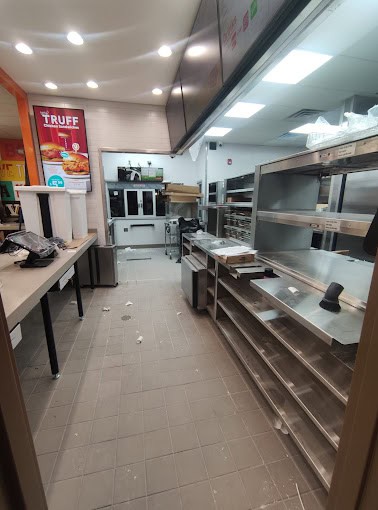
The condition the construction crew left things in is another major variable. If the contractor did a thorough rough sweep before leaving, the final clean team can focus on detail work. If they left significant debris behind, the final clean crew is spending time on tasks that should have been handled earlier — and that time shows up in your invoice.
The type of renovation matters too. A kitchen remodel generates different residues than a basement finishing project or a bathroom tile job. Grout haze removal, for example, requires specific products and timing that a standard post-construction clean may not include unless it’s explicitly scoped. New construction — a full build from the ground up — generates far more debris, dust, and surface contamination than a targeted renovation, and the cleaning scope reflects that.
In Nassau County specifically, coastal conditions add a layer of complexity that doesn’t apply in most markets. Communities like Long Beach, Oceanside, and Atlantic Beach deal with salt air and humidity that can interact with construction dust to create more stubborn surface deposits. If your renovation involved exterior work or your home sits near the water, that’s worth mentioning when you’re getting a quote — it can affect both the products used and the time required.
Labor accounts for roughly 90% of post-construction cleaning costs, which is why hourly rates matter as much as per-square-foot rates. Any quote that seems significantly below market should prompt a question about who’s doing the work, what equipment they’re using, and whether they’re insured.
The top driver of negative reviews in the cleaning industry is billing ambiguity. Not bad cleaning. Surprise charges. A quote that said one thing and an invoice that said another.
The most common sources of that ambiguity in post-construction work: debris haul-away being listed separately from debris removal. Window cleaning being scoped as “interior only” when the client assumed it meant both. Supply fees and equipment surcharges appearing as line items. Pricing that changes when the crew arrives and sees the actual condition of the space.
A legitimate quote for construction clean up should tell you exactly which phases are included, what tasks are covered within each phase, whether supplies and materials are included or billed separately, how pricing changes if the scope is larger than estimated, and what the process is if something is missed or you’re not satisfied.
If a company can’t answer those questions clearly before you sign anything, that’s your answer.
We bring everything needed for a complete post-construction clean — all supplies and materials are included, no supply fees, no equipment surcharges. We work from a defined scope so you know what’s being done before we start, and we stand behind the results. If something isn’t right, we come back and make it right at no cost.
We’re a family-owned business based in Garden City, and we’ve been doing this work in Nassau County long enough to know what the homes here actually need — the aging mid-century housing stock in Levittown and Massapequa, the waterfront conditions in Long Beach and Oceanside, the tight contractor timelines that leave homeowners scrambling to get a space cleaned before the furniture shows up. We’re local, we’re licensed and insured, and we have 100+ Google reviews from Nassau County neighbors who’ve seen the work firsthand.
Post-construction clean up is not the place to cut corners. The surfaces are new, the stakes are high, and the window to address certain residues — grout haze, adhesive, paint splatters — closes faster than most people realize.
Know which phases your project actually needs. Get a written scope before anyone starts. Ask about insurance, equipment, and what happens if something gets missed. Those three questions alone will tell you a lot about who you’re hiring.
If you’re in Nassau County and you want a straight answer on what your project involves and what it will take to get it done right, reach out to us. Call us at 855-200-9376 or text us at 718-316-8924 — we’re available Monday through Saturday, 8AM to 6PM, and we’ll give you a clear picture of the scope before we ask for anything else.
Article details:
Share:
Continue learning: