Not all office cleaning is equal — especially in Mineola. Here's what the standard actually looks like for Nassau County's dental offices, law firms, and professional spaces.
Share:
Summary:
Mineola isn’t a generic office market. You’ve got medical practices clustered around NYU Winthrop Hospital, law firms operating in the shadow of the Nassau County Courthouse, and a steady stream of clients and patients moving through professional spaces every day. The cleaning standard those environments require is not what most companies are set up to deliver. If you’ve had a vendor who showed up inconsistently, sent a different crew each week, or left your waiting room smelling like a chemical spill, you already know the gap between what’s promised and what’s actually delivered. Here’s what to look for — and what professional office cleaning in this market actually looks like.
Mineola is Nassau County’s county seat. That means the courthouse, the county government offices, and a dense concentration of legal and professional services firms are all operating within a few blocks of each other. Add NYU Winthrop Hospital on Mineola Boulevard and the specialist practices, dental offices, and imaging centers that have grown up around it, and you have one of the most concentrated professional office markets in all of Nassau County.
That concentration matters for cleaning. A dental office has cross-contamination concerns a standard office doesn’t. A law firm hosting client depositions needs a waiting room that makes an immediate impression. A medical practice with patient-facing common areas needs air quality and surface sanitation that goes well beyond a quick wipe-down.
The cleaning standard Mineola’s commercial market requires is specific — and not every vendor is equipped to meet it. We’ve worked in this market long enough to know what works and what doesn’t.
There’s a version of office cleaning that means someone ran a mop across the floor and emptied the trash. And then there’s the version that actually keeps your space presentable, your staff healthier, and your clients from noticing something they shouldn’t.
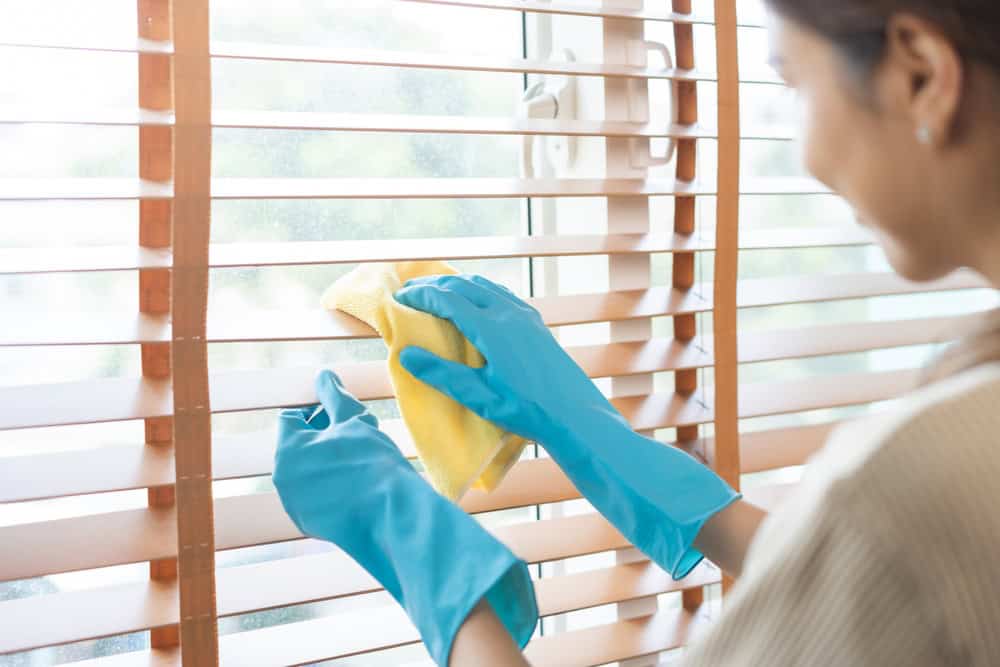
At the professional level, office cleaning covers the surfaces your team touches constantly — door handles, light switches, shared equipment, countertops, restroom fixtures — because those are the places where bacteria and viruses actually spread. We vacuum with HEPA filter equipment that captures allergens instead of pushing them back into the air, and use microfiber cloths that trap particles rather than redistributing them across surfaces. In Nassau County’s pollen-heavy spring and the salt-tracked-in winters that come with Long Island’s weather, that distinction matters more than most people realize.
It also means working around your schedule. A dental practice can’t have a cleaning crew in the middle of patient hours. A law office with early morning client meetings needs the space ready before anyone arrives. We account for this — before-hours, after-hours, or weekend scheduling isn’t a special accommodation; it’s a baseline expectation for any commercial operator worth working with.
For medical and dental offices specifically, the standard goes further. We use color-coded cleaning tools to prevent cross-contamination between different areas of the space. EPA-registered disinfectants go on patient-contact surfaces, not just general-purpose cleaner. The post-service inspection — walking the space after the crew finishes to confirm everything meets standard — is what separates a professional operation from someone who’s just going through the motions.
The difference in practice is noticeable. Your staff notices it. Your clients and patients notice it. And when you’re running a practice or a firm where first impressions carry real weight, that difference isn’t small.
Most vendors will tell you they’re reliable, professional, and thorough. That’s not useful information. What’s useful is knowing what to actually ask before you commit.
Start with licensing and insurance. In New York, there’s no single statewide license required for cleaning companies, but a legitimate operator will be properly registered as a business, carry general liability insurance, and be able to show you documentation on request. If a vendor hesitates on that question, that’s your answer. Commercial clients — especially medical and dental practices — are handing over after-hours access to their space. You need to know the company is covered if something goes wrong.
Ask about crew consistency. The most common complaint in commercial cleaning isn’t that the first clean was bad — it’s that quality dropped after the first few weeks because a different crew showed up each time with no knowledge of the space or the client’s preferences. A vendor who can tell you how they handle crew continuity is a vendor who’s thought about retention and accountability. One who can’t answer the question clearly probably hasn’t.
Ask what’s included in the scope. All cleaning supplies and materials should be provided — you shouldn’t be managing a supply closet on top of everything else. Ask whether the service is customized to your specific space or whether it’s a standard checklist applied to every client the same way. A dental office and a real estate office have genuinely different needs, and a vendor who treats them identically isn’t actually serving either one well.
Finally, look at the reviews — not just the star rating, but what people are actually saying. A company with 100 or more Google reviews from Nassau County clients has a track record that’s hard to fake. Look for patterns: are people mentioning consistency, responsiveness, and attention to detail? Or are the reviews thin and generic? The language clients use tells you more than any sales pitch.
Want live answers?
Connect with a One-A Cleaning and Maintenance expert for fast, friendly support.
The Town of Hempstead is the largest town in New York State by population, and its commercial corridors — Fulton Avenue, Main Street, Peninsula Boulevard — see the kind of foot traffic that accelerates wear on floors, restrooms, and common areas. The mix of retail, professional services, and medical offices in Hempstead creates a diverse set of cleaning needs under one geographic umbrella.
What stays constant across both Mineola and Hempstead is the expectation of reliability. Businesses in both markets are dealing with high client and customer volume, tight operating schedules, and the kind of visibility where a dirty office is noticed immediately. The standard for commercial cleaning long island businesses actually need isn’t aspirational — it’s operational.
This is one of the most common questions — and the honest answer is that it depends on the type of space, the volume of traffic through it, and how the space is used.
For a small professional office with a handful of staff and limited client visits, weekly cleaning is often sufficient to maintain a presentable environment. For a dental or medical practice with patient traffic throughout the day, daily or near-daily cleaning of restrooms, waiting areas, and treatment-adjacent spaces is a reasonable baseline. High-touch surfaces in any medical environment — door handles, check-in counters, waiting room seating — warrant more frequent attention than a standard office would require.
Seasonal factors play into this too. Nassau County winters bring road salt and sand tracked in from parking lots and sidewalks. Spring pollen season puts pressure on air quality and surfaces near entryways. A cleaning schedule that’s calibrated to the time of year — not just set once and forgotten — keeps the space consistently clean rather than just periodically presentable.
For businesses that aren’t sure where to start, we assess the space, ask about traffic patterns and business hours, and put together a schedule that actually fits the operation. Daily, weekly, bi-weekly, and monthly options all have their place depending on the environment. One-time deep cleans are also worth considering when a space needs a reset — after a renovation, before a new lease, or heading into a busy season.
The goal is a cleaning frequency that means you’re never walking in on a Monday morning wondering whether anyone showed up the week before.
Yes — and this is where a lot of vendors fall short.
A general-purpose commercial cleaning company that does a fine job on a law office or a real estate agency may not be equipped for a dental practice or a specialist medical office. The difference isn’t just about effort; it’s about protocol.
Healthcare-adjacent spaces require EPA-registered disinfectants on surfaces that come into contact with patients. They require color-coded cleaning tools to prevent cross-contamination between different areas of the office — you don’t use the same equipment in the restroom that you use in the treatment area. They require a level of consistency in who’s cleaning and how they’re cleaning it, because variation in protocol creates risk that a dental practice or medical office simply can’t afford.
Air quality is another factor. HEPA filter vacuums are standard in environments where allergens and airborne particles are a concern — and in a waiting room full of patients, that concern is real. Eco-friendly cleaning products matter here too, not just as a sustainability preference but as a practical one: harsh chemical odors in a patient-facing environment are noticeable, and they create an impression you don’t want.
When you’re evaluating vendors for a Mineola dental or medical office, ask specifically about cross-contamination prevention, the products they use, and whether they’ve cleaned similar spaces before. A vendor who can answer those questions clearly has done the work. One who gives you a generic answer about “high standards” probably hasn’t.
We serve dental offices, medical practices, and law firms across Mineola and the broader Nassau County area — and we approach each one based on what that specific environment actually requires, not a one-size checklist.
The bar for professional office cleaning in Nassau County — especially in markets like Mineola and Hempstead — is higher than most vendors advertise. Reliability, crew consistency, proper equipment, and protocols that actually fit your type of space are the things that determine whether a cleaning relationship works long-term.
If you’ve been burned before, the answer isn’t to lower your expectations — it’s to ask better questions before you commit. Licensing, insurance, crew continuity, scope clarity, and a satisfaction guarantee that means something are the markers of a vendor worth trusting with after-hours access to your space.
We’ve been serving Nassau County businesses since 2007, starting with a single van and growing through the kind of referrals that only come from doing the work right. If you want to talk through what your office actually needs, reach out — text or call, and a real person will get back to you.
Article details:
Share:
Continue learning: