Your renovation is finished, but the dust isn't. Here's what professional new construction cleaning actually covers — and why it matters in Nassau County.
Share:
Summary:
Your renovation is finished. The contractors are gone. And the space still looks like a disaster zone. There’s dust on every surface, haze on the new windows, and something sticky on the floor you just paid to have installed. This is the part nobody warns you about — the gap between “construction complete” and “actually move-in ready.”
In Nassau County, where the average kitchen or bathroom renovation represents a serious investment, getting this final step right matters. Here’s what you need to know before you grab a mop or hire the first cleaning company you find.
New construction cleaning is not the same as a deep clean or a standard house cleaning. It’s a separate discipline that deals with construction-specific debris — fine silica dust, drywall particulate, caulk residue, adhesive film, protective coatings on appliances and windows, and VOCs from fresh paint. Standard cleaning products and household vacuums aren’t built for this. A regular vacuum will recirculate fine construction dust back into the air rather than capture it.
Professional post-construction cleaning unfolds in three distinct phases. The rough clean handles bulk debris removal and prepares the space for final trades like painters and flooring crews. The light clean scrubs down surfaces and deep cleans floors once construction is fully wrapped. The final clean is the presentation-level polish — the pass that makes the space genuinely ready for occupancy. Each phase builds on the last, and skipping any one of them shows.
Here’s the part most Nassau County homeowners find out too late: nearly every general contractor will do a rough cleanup before they leave. They’ll sweep, haul out the big debris, and call it done. That’s standard — and it’s nowhere near sufficient for moving back in.
What the broom clean leaves behind is the problem. Fine drywall dust settles on every horizontal surface in the house, including inside your HVAC system. Construction dust that gets pulled into ductwork will redistribute through the home for weeks after move-in, landing on the new countertops and floors you just had installed. That’s not a hypothetical — it’s what happens in almost every renovation, whether you’re finishing a basement in Levittown, adding a master suite in Garden City, or gutting a kitchen in Merrick.
Beyond the dust, there’s adhesive residue on new flooring, protective film on appliances and windows that has to be removed carefully, and grout haze on tile surfaces that requires the right product to lift without damaging the finish. These aren’t things you can address with an all-purpose spray and a roll of paper towels.
There’s also a timing issue that catches a lot of people off guard. Fine construction dust continues to settle for several days after the initial cleanup. If you hire someone to do a single-pass clean the day after the contractors leave, you’ll find a fresh layer of dust on everything within a week. We account for this by separating the light clean and the final clean — giving the dust time to fully settle before the final polish.
The bottom line is that the contractor’s job is to build. Cleanup at that level is a courtesy, not a specialty. Getting the space truly clean requires a different kind of crew with different equipment and a different process.
Not every cleaning company is set up to handle post-construction work. This is worth understanding before you start making calls, because the difference between a company that does this regularly and one that’s winging it will show up in your finished space — sometimes permanently.
The first thing to ask about is equipment. A legitimate construction cleaning company will show up with HEPA-filtered vacuums. HEPA filtration captures the fine particulate that construction generates — the stuff that’s invisible until it settles on your new dark countertops or triggers allergy symptoms in your kids. A standard shop vac or household vacuum doesn’t do this. If a company doesn’t mention HEPA equipment when you ask, that’s a signal.
The second thing to ask about is how they handle new finishes. This is where inexperienced cleaners cause real damage. New quartz countertops, marble, LVT flooring, chrome fixtures, and stainless steel appliances each require a specific cleaning agent and technique. Using the wrong product — even something as common as a vinegar-based cleaner — can permanently etch a marble surface or strip a newly applied sealant. When your renovation represents $30,000, $50,000, or more, this is not a small risk.
Third, ask whether they’re licensed and insured — and ask specifically about general liability and workers’ compensation. In Nassau County, where home values run high and renovation investments are substantial, an uninsured cleaner who damages a new surface leaves you with no recourse. This isn’t a formality. It’s financial protection.
Finally, look at their reviews. Not just the star rating — read what people are saying. Look for mentions of construction cleanup specifically, not just general house cleaning. A company with 100+ Google reviews and a consistent track record of post-renovation work is a very different hire than a company with 12 reviews and no mention of construction anywhere.
Want live answers?
Connect with a One-A Cleaning and Maintenance expert for fast, friendly support.
Nassau County is a market where renovation activity runs year-round, but it concentrates in spring and fall — and the demand for quality post reno cleaning service spikes right along with it. The county’s housing stock skews heavily toward mid-century construction: the 1950s and 1960s Levittown-era homes, the North Shore colonials, the South Shore ranches. These homes get updated constantly, and every kitchen gut, bathroom addition, or basement finishing project generates the same cleanup challenge on the back end.
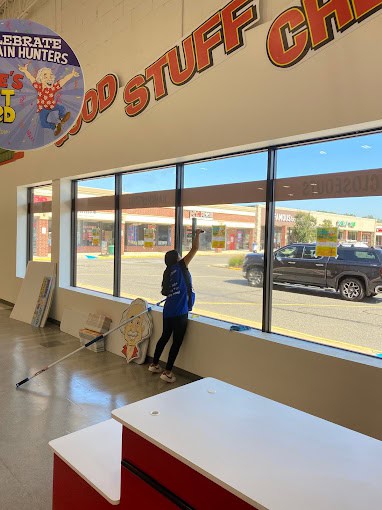
What a professional post-renovation cleaning should include, at minimum: thorough HEPA vacuuming of all surfaces including walls, ceilings, and baseboards; removal of protective film from appliances, windows, and fixtures; cleaning of all interior glass; scrubbing of tile, grout, and stone with surface-appropriate products; and a final pass on all floors with the right cleaner for the specific material. The scope varies by project size, but the standard shouldn’t.
This is one of the most common questions homeowners ask, and the honest answer is: it depends on the scope of your renovation and the size of your home. A bathroom remodel in a Wantagh ranch is a very different job than a full gut renovation of a four-bedroom colonial in Oyster Bay.
For a single-room renovation — a kitchen or bathroom — a thorough professional clean typically takes a few hours per phase. For whole-home renovations or new builds, the timeline extends accordingly. Commercial projects, like a dental office renovation in Hempstead or a retail buildout in Westbury, can require multiple days across the three phases, depending on square footage.
What matters more than the total hours is the phasing. Rushing through a single visit to get it done in one shot almost always means the final clean is compromised by dust that hasn’t fully settled yet. The better approach is to schedule the light clean once construction is fully wrapped, then come back for the final clean a few days later. That second visit captures everything the first pass couldn’t — the fine particulate that was still airborne when the initial crew came through.
If a company quotes you a one-and-done visit for a major renovation, ask them how they handle the dust that continues to settle after their visit. Their answer will tell you a lot about how experienced they actually are with post-construction work specifically.
It’s easy to think of construction dust as just a nuisance — annoying to clean up, but not a real concern. The reality is more serious than that, and it’s worth understanding before you move your family back in.
Construction dust contains silica particles from drywall, concrete, and masonry work. Fine silica particulate is a known respiratory hazard, and prolonged exposure is associated with lung disease. Beyond silica, post-renovation spaces often contain VOCs — volatile organic compounds — from fresh paint, caulk, adhesives, and new flooring materials. These off-gas into the air for days or weeks after application.
For most healthy adults, short-term exposure at typical renovation levels isn’t an emergency. But for households with young children, elderly family members, or anyone with asthma, allergies, or respiratory conditions, moving back into a space that hasn’t been properly cleaned introduces real health risks. This is especially relevant in Nassau County’s coastal communities — Long Beach, Atlantic Beach, Nassau Shores — where higher ambient humidity affects how dust settles and how quickly mold can establish in newly finished spaces.
Professional post-construction cleaning addresses this directly. HEPA-filtered vacuums capture fine particulate rather than recirculating it. Proper surface cleaning removes chemical residue. And when the job is done right, the air quality in the space is genuinely safe for re-occupancy — not just visually clean. That distinction matters a lot when you’re moving your family back in after weeks of construction disruption.
The renovation itself gets all the attention — the design decisions, the contractor meetings, the budget conversations. The cleanup at the end rarely gets the same thought, and that’s usually when problems show up. Damaged finishes, lingering dust, air quality issues — most of them are avoidable with the right post-construction cleaning approach.
The short version: hire a company that knows the difference between a broom clean and a final clean, shows up with HEPA equipment, understands how to treat new surfaces, and is properly insured. Those aren’t high standards — they’re just the right ones when you’ve invested in a renovation worth protecting.
If you’re wrapping up a project in Nassau County and want to talk through what the cleanup actually involves, One A Cleaning and Maintenance is a locally owned, family-run team that’s been doing this work here for years. You can reach us by text at 516-695-5649 to ask about availability or get a quote — no pressure, just a straight answer.
Article details:
Share:
Continue learning: